

SIP Trunk
Connect your IP PBX to the public network, your branch offices and the platforms your team uses.
- IP PBX
- Configurable concurrent channels
- Business phone numbers
TELEPHONY
Your company’s voice, connected
A SIP trunk links your IP PBX or communications platform to the public telephone network. It lets you organize calls, branch offices and distributed teams on an IP architecture built to grow with your business.
- IP PBX
- Configurable concurrent channels
- Softphone and platform integration
- Multiple offices and distributed teams
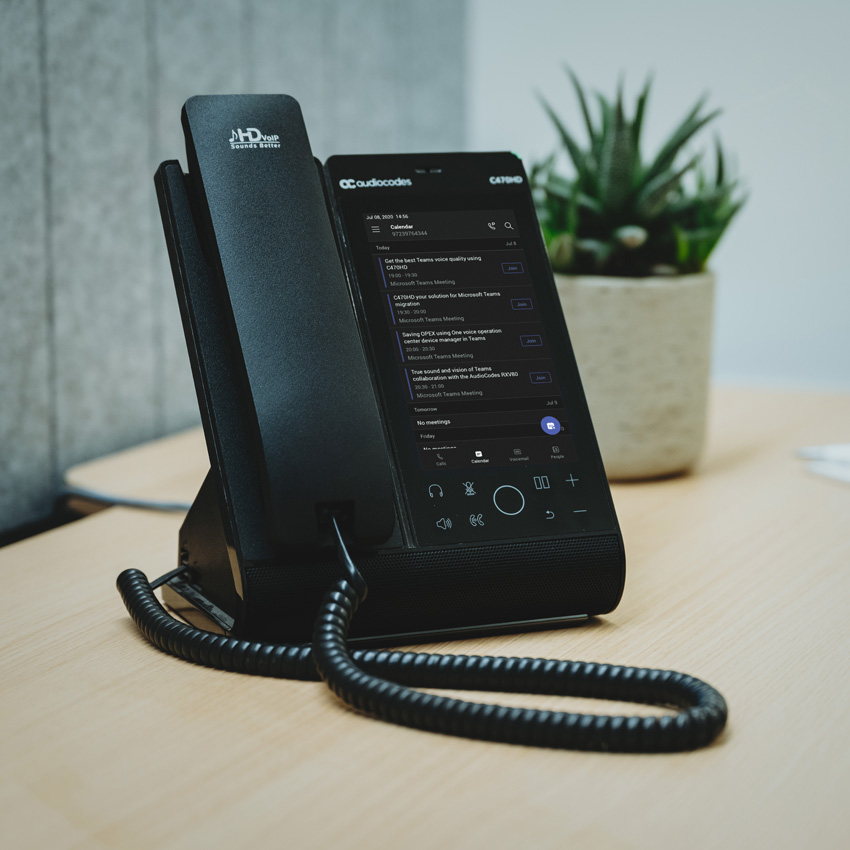
What do we call a SIP trunk?
A SIP trunk connects your PBX or communications platform to the public network over the internet. It is the link that lets you organize calls, channels and destinations within a voice-over-IP architecture.
Your phone system, connected to the internet
The SIP trunk replaces conventional physical trunks and cabling with a direct digital connection between your IP PBX and the public telephone network.
All voice traffic runs QoS-prioritized over your data link, guaranteeing availability and corporate audio quality without relying on analog lines.
One trunk, your whole organization connected
A single SIP hub centralizes outgoing and incoming communications for your main office, branches and remote workers, with no separate trunks per building.
This simplifies administration, unifies your corporate numbering plan and makes it easy to scale when new offices open.
Scalability, integration and business continuity
The SIP trunk enables concurrent voice channels based on your company’s real demand, integrating transparently with your phone systems and management platforms.
With iWinds proactive support and monitoring, your voice infrastructure stays stable, auditable and ready to grow with your operation.
The difference between SIP Trunk and VoIP
| VoIP | SIP Trunk | |
|---|---|---|
| Service type | Technology for transmitting voice over IP networks. | A service link that connects your PBX to the public network. |
| Infrastructure | An IP network plus compatible devices or software. | Internet, an IP PBX and a SIP provider. |
| Channel scaling | Limited by fixed trunks or hardware. | Channels configurable on demand. |
| IP PBX integration | Requires proprietary hardware. | Compatible with IP PBX, softphones and platforms. |
| Business numbering | Tied to the physical line. | Numbers independent of the connection point. |
| Multi-site | Requires one link per location. | Branches centralized on a single trunk. |
| Expansion | Needs a new circuit or trunk. | Adjusted by configuration, no physical work. |
| Business continuity | A single physical point of failure. | IP-based failover and alternative routes. |
Let’s talk about the voice architecture you need
Tell us how your teams and offices communicate today. We assess your scenario and help you define the right integration.